Connecticut Pay By Plate is a camera-based toll system that photographs your license plate and mails you a bill. The state has no cash toll booths and no home-state E-ZPass. Every driver who crosses a Connecticut toll gantry without a transponder gets a printed invoice in the mail. This page covers the full process, the fees, the deadlines, the dispute options, and the E-ZPass alternatives that work in CT.

What Is Connecticut Pay By Plate?
Connecticut Pay By Plate is the state’s all-electronic toll collection method. Overhead steel structures called gantries sit above the highway. Each gantry has cameras that take clear photos of every vehicle’s front and rear license plate. The system reads the plate number, checks it against state DMV records, and creates a toll bill.
Connecticut rolled out this system in 2026. It official E-ZPass website replaced the older cash and ticket booths that lined I-95, I-91, I-84, and Route 15. Today, no driver stops to pay. The gantry reads plates as cars pass under it at full highway speed.
How Connecticut Pay By Plate Works Steps
The Pay By Plate system runs without any action from the driver. Here is the full cycle from the moment you pass under a gantry to the moment you pay the bill.
Step 1: You Drive Under the Gantry
As you pass under the gantry, sensors in the road trigger the cameras. There are no slowdowns, no toll booths, and no stopping. The gantry sits high above the lanes so trucks and tall vehicles pass under it with no issue.
Step 2: Cameras Take Photos
High-resolution cameras take at least three photos of each vehicle. The cameras capture the front plate, the rear plate, and a wider view of the car. The system stores all photos in case the plate number is hard to read or the owner disputes the bill.
Step 3: Plate Number Is Read
Software reads the characters on the plate. The system then checks that plate against the Connecticut DMV database. The database holds the registered owner’s name, address, and vehicle details.
Step 4: A Toll Record Is Created
If the plate is in the DMV system, a toll record is created. The record includes the date, time, gantry location, toll amount, and plate number. The system then adds a small admin fee, since mail billing costs the state more than electronic billing.
Step 5: An Invoice Is Mailed
The state mails a paper invoice to the registered owner. The invoice usually arrives within 30 to 45 days of the toll. The bill shows the toll amount, the admin fee, the total due, and the date you must pay by.
Step 6: You Pay the Bill
You can pay online, by phone, by mail, or in some cases in person. The fastest option is the online portal. The system accepts credit cards, debit cards, and bank transfers.
Connecticut Toll Roads and Gantry Locations
Connecticut has tolls on four main roads. Each road has multiple gantries. The toll amount depends on the gantry you pass under. The state posts the full list of gantries on its toll website.
I-95 Tolls in Connecticut
I-95 runs along the Connecticut coast. The highway has toll gantries in several towns from the New York line to the Rhode Island line. Drivers who use I-95 for daily commutes often rack up multiple tolls per day. The gantries sit between exits, so short local trips may still trigger a toll if you cross one of them.
I-91 Tolls in Connecticut
I-91 runs north from New Haven to the Massachusetts line. Gantries sit along the route in New Haven, Wallingford, and near the border. Commuters from towns like Meriden, Middletown, and Cromwell cross these gantries daily.
I-84 Tolls in Connecticut
I-84 crosses the state from the New York line to the Massachusetts line. Gantries sit in Danbury, Waterbury, and near the Union town line. Drivers who travel to Hartford from New York often pass two or three gantries in one trip.
Route 15 Tolls: Merritt Parkway and Wilbur Cross Parkway
Route 15 includes the Merritt Parkway and the Wilbur Cross Parkway. These roads run from the New York line through New Haven. The gantries on Route 15 charge lower tolls than the interstate gantries. Many local drivers use Route 15 as a cheaper option than I-95.
Connecticut Toll Rates by Vehicle Class
Connecticut tolls use a vehicle class system. The class depends on the number of axles and the height of the vehicle. The taller or heavier your vehicle, the more you pay.
Class 1: Two-Axle Passenger Vehicles
Class 1 includes cars, SUVs, vans, and pickup trucks with two axles. Most drivers fall into this class. Class 1 tolls are the lowest rates. The exact rate depends on the gantry.
Class 2: Three-Axle Vehicles and Small Trucks
Class 2 includes small trucks, box trucks, and passenger vehicles pulling a single-axle trailer. The toll for Class 2 is roughly 1.5 times the Class 1 rate.
Class 3: Four-Axle Vehicles and Large Trucks
Class 3 includes larger trucks, buses, and RVs. The toll is about twice the Class 1 rate. Many commercial trucking companies track these tolls carefully as part of their operating costs.
Class 4: Five or More Axles
Class 4 covers the largest commercial trucks. The toll is the highest class. Five-axle trucks are common on I-95 and I-84 because they haul goods along the East Coast.
Class 5: Motorcycles
Motorcycles pay a discounted rate. The cameras at the gantry read motorcycle plates, and the system applies the Class 5 rate automatically. Some motorcycle owners worry that the system misreads their tilted plate, but the multi-photo capture reduces this risk.
Current Connecticut Toll Rate Examples
Toll rates on the interstate gantries run from about $0.50 to $3.00 for Class 1 vehicles. Route 15 gantries charge lower rates, often under $1.00 for Class 1. The state updates rates occasionally, and the full rate table lives on the Connecticut DOT website.
| Vehicle Class | Example Vehicles | Approx. Rate vs. Class 1 |
|---|---|---|
| Class 1 | Car, SUV, pickup, van | 1.0x base rate |
| Class 2 | 3-axle truck, car with trailer | 1.5x base rate |
| Class 3 | 4-axle truck, bus, large RV | 2.0x base rate |
| Class 4 | 5+ axle semi-truck | 3.0x base rate |
| Class 5 | Motorcycle | 0.5x base rate |
How to Pay Your Connecticut Toll Invoice
Once your invoice arrives, you have several ways to pay. Pick the method that fits your speed and your comfort level.
Pay Online Through the Connecticut Toll Portal
The online portal is the fastest way to pay. You enter your plate number or the invoice number from the bill. The portal accepts Visa, MasterCard, American Express, Discover, and ACH bank transfers. You can also store a payment method for future tolls. Many drivers like to check the portal often because new tolls appear there faster than in the mail.
Pay by Phone
You can call the Connecticut toll customer service line. An agent takes your plate number or invoice number and your payment details. The line is open during business hours, and the call is short. Phone payment is good if you do not have internet access or if you want to talk to a real person.
Pay by Mail
The invoice includes a return envelope. You write a check or get a money order, fill in the payment slip, and mail it back. Mail payment is the slowest option, and you risk a late fee if the letter is delayed. The state does not recommend mail payment for drivers close to the due date.
Pay in Person at a Walk-In Center
Some Connecticut service centers accept toll payments in person. The exact locations and hours change over time, so check the toll website before you drive over. In-person payment is rare but useful for people who prefer to pay with cash or who want a paper receipt.
Set Up a Pre-Pay Account
Some drivers open a pre-pay account even without a transponder. You load money onto the account, and the system draws from it when you pass a gantry. Pre-pay accounts avoid the admin fee that comes with paper invoices. You can set this up through the Connecticut toll website.
Connecticut Pay By Plate Fees and Surcharges
The base toll is only part of what you pay. official websiteThe state adds fees for paper billing, late payment, and unpaid tolls. Knowing these fees helps you avoid paying more than you need to.
Admin Fee on Paper Invoices
Every Pay By Plate invoice carries an admin fee. The fee covers the cost of printing, mailing, and processing a paper bill. The admin fee is higher than the toll itself on some smaller gantries. Drivers who want to avoid the fee should open an out-of-state E-ZPass account or a pre-pay account.
Late Payment Penalties
If you miss the due date on your invoice, the state adds a late fee. The late fee grows the longer you wait. After 30 days past due, the case moves toward a violation. After 60 days, the case can be sent to collections or to the DMV for a registration hold.
DMV Registration Hold
The Connecticut DMV can block your vehicle registration renewal if you have unpaid tolls. A registration hold means you cannot renew your tags until you pay the tolls, fees, and any related penalties. The hold lifts once the full balance is paid.
Collections and Credit Reporting
Unpaid tolls can be sent to a third-party collections agency. The collections agency can report the debt to credit bureaus. A collections record on your credit report can hurt your credit score and make it harder to get loans, credit cards, or even some jobs.
Reduced Fees for Out-of-State E-ZPass Users
Drivers with an E-ZPass from another state do not get a paper invoice. The system reads the EZPass tag and charges the toll directly to the account. Because the state saves on printing and mailing, the toll is lower for EZPass users. The savings on a single trip can equal the cost of a transponder over time.
Connecticut Pay By Plate Grace Period and Deadlines
The state gives you a clear window to pay your invoice. The window starts when the toll is taken and ends on the printed due date. Most invoices allow at least 30 days from the date of mailing.
How Long You Have to Pay
The grace period is the time between the invoice mail date and the due date. During the grace period, you can pay only the toll and the admin fee. After the grace period ends, late fees start to add up. The grace period applies only to the first invoice, not to follow-up bills.
What Happens After the Due Date
The day after the due date, the invoice becomes past due. The state sends a reminder letter. The reminder adds a late fee. If you still do not pay, the state sends a final notice. The final notice warns of a registration hold and collections.
How to Avoid Late Fees
Pay the bill the same day you open the envelope. If you travel often in CT, log into the toll portal every week. Set a calendar reminder for the day you receive the bill. Pay by credit card online to lock in the payment date and to get a paper trail.
Connecticut Toll Violations and Penalties
A violation is a toll that goes unpaid past the final notice. Violations carry heavier penalties than late invoices. The state treats repeated violations seriously.
First Violation
The first violation notice includes the toll, the admin fee, a violation fee, and a new due date. The violation fee is much higher than the late fee. If you pay the violation within the new window, the case closes and no further action is taken.
Second and Later Violations
If you ignore the first violation, the state sends a second notice. The second notice has an even higher fee. After a second notice, the state can refer the case to a special toll violations unit. The unit can issue a court summons in serious cases.
Court Summons and Fines
A court summons is a legal order to appear in court or pay a fine. official agency Court fines are much higher than toll violation fees. A court case can also result in a judgment on your record, which can affect credit, jobs, and other court matters.
Vehicle Registration Suspension
After repeated unpaid violations, the state can ask the DMV to suspend your vehicle registration. official customer serviceA suspended registration means you cannot legally drive the car. To get the registration back, you must pay all unpaid tolls, fees, and a reinstatement fee.
E-ZPass as an Alternative to Connecticut Pay By Plate
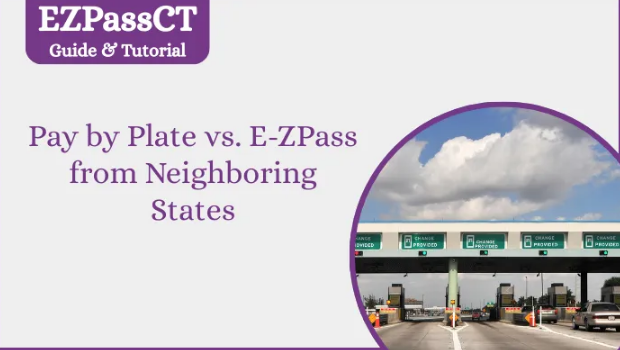
Since Connecticut has no home-state E-ZPass, drivers who want a transponder must open an account with another state’s E-ZPass agency. The most popular options are New York, Massachusetts, and Rhode Island. All E-ZPass agencies in the network work on Connecticut toll roads.
Why Out-of-State E-ZPass Saves Money
Out-of-state E-ZPass accounts avoid the paper invoice admin fee. The toll charged to an E-ZPass account is the same as the base toll, with no extra fees. Over a year of regular commuting, the savings can be hundreds of dollars.
New York E-ZPass for Connecticut Drivers
New York E-ZPass is one of the most common choices for CT drivers. You can sign up online, link a payment method, and get a tag in the mail. NY E-ZPass works on all CT toll roads, and you can use the same tag in 18 other states.
Massachusetts E-ZPass for Connecticut Drivers
Massachusetts offers EZPass under the EZDriveMA brand. MA EZPass works the same way as NY E-ZPass in CT. Many CT residents pick MA EZPass because of closer customer service centers.
Rhode Island and Other E-ZPass States
Rhode Island, New Jersey, Maine, and other E-ZPass states also work in CT. The choice often comes down to the closest customer service center, the lowest monthly fee, and the easiest sign-up process.
Transponder Mounting and Use
Once your transponder arrives, mount it on the inside of your windshield behind the rearview mirror. The tag must face forward and be unobstructed. A poorly mounted tag may not be read, and the system will treat your trip as a Pay By Plate toll.
Connecticut Pay By Plate for Rental Cars
Rental cars present a special challenge. The rental company owns the car, but the driver is the one who crossed the gantry. Most rental companies handle the toll for you, and they add their own fees.
How Rental Companies Charge Tolls
Most rental agencies in Connecticut work with a toll service. The service tracks all gantry crossings, adds a daily or per-use fee, and bills the rental company. The rental company then charges your credit card, often with a markup of $5 to $15 per day of toll use.
Using Your Own E-ZPass in a Rental
You can often bring your own E-ZPass tag from another state and use it in a rental. The toll then charges your E-ZPass account at the lower rate. Always tell the rental company first, since some contracts ban outside transponders.
Avoiding Rental Car Toll Markups
Read your rental contract before you drive. Some companies allow you to decline their toll service and pay the tolls yourself through the CT portal. If you choose this option, track every toll and pay it as soon as the invoice arrives to avoid late fees.
Connecticut Toll Disputes and Appeals
Sometimes a bill is wrong. You may have been in a different car, the plate number may have been read wrong, or the toll amount may be off. Connecticut has a formal dispute process for these cases.
When You Can Dispute a Toll
You can dispute a toll if any of these is true: the vehicle was not yours, the plate number on the invoice is wrong, the toll was charged twice, the vehicle was stolen at the time of the toll, or you had a valid E-ZPass that the system did not read.
How to File a Dispute
File a dispute through the Connecticut toll portal. Pick the toll you want to challenge, enter the reason, and upload any proof. Proof can include a police report for a stolen car, a photo of your transponder, or a receipt that shows you were not driving at the time of the toll.
Dispute Decision Time
The state reviews disputes within 30 to 60 days. If the dispute is approved, the toll is removed and any related fees drop with it. If the dispute is denied, the state sends a written reason and gives you a second chance to appeal.
Appeals and Court Hearings
If your dispute is denied, you can ask for a court hearing. The hearing is held at a Connecticut Superior Court. A judge reviews the evidence and makes a final ruling. Court hearings are free, but you should bring all your proof and paperwork.
Connecticut Pay By Plate for Out-of-State Drivers
Out-of-state drivers who cross Connecticut tolls often get a surprise in the mail weeks later. The bill goes to the address on file with the driver’s home state DMV. Many states share plate data with each other for toll billing purposes.
How the State Finds Out-of-State Owners
When the gantry cameras read a plate, the system checks the plate against a national database. The database includes plate data from all 50 states. The system finds the registered owner and mails the bill to that address.
Interstate Plate Data Sharing
States share plate data under the Driver License Compact and other agreements. This sharing makes it hard to skip a toll by being from out of state. The home state can also enforce the toll if the driver ignores the bill.
Reciprocity Agreements
Connecticut has reciprocity agreements with nearby states. If a CT driver skips a toll in another state, that state can ask CT to refuse to renew the CT registration. The same rule works the other way for out-of-state drivers in CT.
Connecticut Pay By Plate Notifications and Text Alerts
Some drivers want to know about tolls the moment they happen. Connecticut offers text and email notifications for drivers who sign up.
How to Sign Up for Toll Alerts
Create a free account on the Connecticut toll portal. Enter your plate number, email, and phone number. Pick the alert option. The system will text or email you each time a gantry reads your plate.
What the Alerts Tell You
Each alert shows the date, time, gantry location, and toll amount. The alert also gives you a link to the portal so you can pay right away. Alerts help you track your tolls without waiting for the paper invoice.
Limits of Toll Alerts
Alerts only work for tolls that have been processed. There can be a delay between the gantry read and the alert. Alerts are not real-time. They also do not replace the paper invoice. You still get a bill in the mail even if you have alerts turned on.
Connecticut Pay By Plate Problems and Fixes
Even a smooth system has bumps. These are the most common issues CT drivers face with Pay By Plate and how to solve them.
Problem: You Never Got an Invoice
If you crossed a gantry and never got a bill, the state may not have your right address. Check your plate registration with the DMV. Make sure the address is current. Log into the toll portal and search for your plate to see if a toll is sitting there unpaid.
Problem: You Got a Bill for a Car You Sold
If you sold the car before the toll, the new owner is responsible. Send the state a copy of the bill of sale. Once they confirm the transfer, the bill moves to the new owner and clears from your record.
Problem: Your E-ZPass Was Not Read
If your transponder was not read, the system treats you as a Pay By Plate driver. Check the tag mounting, the tag battery, and your account balance. Contact your E-ZPass agency to confirm the tag is active. Then dispute the paper invoice and ask the state to convert it to an E-ZPass charge.
Problem: The Plate Number on the Bill Is Wrong
If the system misread your plate, the bill may go to the wrong person. Take a clear photo of your plate and submit it with a dispute. The state will compare the photo to the gantry image and correct the record.
Problem: You Got a Bill for a Rental Car After You Returned It
Rental cars often have plates that stay with the fleet. The bill goes to the rental company, which then charges you. To avoid surprise bills, check the rental company’s toll policy and pay any tolls through the rental portal before you leave the lot.
Connecticut Pay By Plate and Fleet Vehicles
Businesses with company cars and trucks often have many tolls to track. Pay By Plate affects fleet operations in specific ways.
Fleet Account Options
Some E-ZPass agencies offer fleet accounts. Fleet accounts let a business add many vehicles to one account, set spending limits, and pull toll reports. The reports help the business track costs, bill employees, and manage expenses.
Pay By Plate Reports for Fleets
Businesses without a fleet account can still use the Pay By Plate portal. They can search by plate number, pull a list of all tolls for that plate, and download a CSV file for their records. This manual process works for small fleets.
Tax Deductions for Business Tolls
Business tolls are tax-deductible as a vehicle operating cost. Keep a printed or digital record of every toll. Add the tolls to your mileage log or expense report. The state does not mail a year-end summary, so the records must come from your own files or the portal.
Connecticut Pay By Plate and Toll Calculators
Drivers who want to know the cost of a trip before they take it can use a toll calculator. A toll calculator adds up the gantries on a route and shows the total cost.
How Toll Calculators Work
You enter your start point, your end point, and your vehicle class. The calculator checks the map for all gantries on the route. It then shows the total toll for the trip, broken down by gantry.
Popular Toll Calculators
Several free toll calculators cover Connecticut, including Google Maps, Waze, and third-party sites. The numbers are estimates, since rate changes can lag. Always check the official CT DOT site for the most current rates.
Why a Toll Calculator Helps
A toll calculator helps drivers plan their budget. A commuter who knows the daily toll cost can set aside money each month. A road-trip driver can choose between two routes based on the total toll cost.
Connecticut Pay By Plate Privacy and Data
The Pay By Plate system collects a lot of data. Illinois Payment GuideEach gantry read creates a record of where a vehicle was, when, and how often. Drivers often wonder how the state uses that data.
What Data the System Collects
The system collects the plate number, the gantry location, the date, the time, the vehicle class, and photos of the vehicle. The data links to your DMV record, which includes your name and address.
How Long the State Keeps the Data
Connecticut keeps toll data for a set period. The retention period depends on the type of record. Paid tolls are kept for audit purposes. Unpaid tolls are kept until the case is closed or written off.
Who Can See Your Toll Data
Only authorized state workers and contractors can see your toll data. The data is not shared with the public. The state may share data with law enforcement under a court order or for an active investigation.
Connecticut Pay By Plate vs. Other State Systems
Many states use camera tolling. Each state runs the system a little differently. Comparing CT to its neighbors helps drivers who travel across state lines.
New York Pay By Plate
New York also uses camera tolling. NY Tolls by Mail sends bills to out-of-state drivers without an E-ZPass. NY rates are higher than CT rates, and NY late fees add up faster. NY also charges higher admin fees on paper invoices.
Massachusetts Pay By Plate
Massachusetts calls its system Pay By Plate. MA tolls are on the Massachusetts Turnpike, the Sumner Tunnel, and the Ted Williams Tunnel. MA bills drivers without an EZPass at a higher rate, just like CT.
Rhode Island Pay By Plate
Rhode Island uses a similar system. RI tolls are on I-95. RI bills out-of-state drivers without an E-ZPass at a higher rate. RI also has a reciprocity agreement with CT.
Connecticut Pay By Plate for Visitors and Tourists
Visitors to Connecticut often do not know they need to pay tolls. The state has no cash booths, so tourists cannot pay on the spot. Here is what visitors need to know.
How Visitors Get Billed
Visitors get billed by mail. Learn about Florida Pay By PlateThe bill goes to the home address on file with the visitor’s home state DMV. Most visitors do not see the bill until they get home. The bill includes the toll and the admin fee.
What Visitors Should Do
Visitors should pay the bill right away. They should not ignore it, since late fees add up fast. If the visitor plans to return to CT, an out-of-state E-ZPass is a smart move.
Best Option for Frequent Visitors
Frequent visitors should open an EZPass account with their home state. The transponder works in CT and across the network. The visitor saves on admin fees and avoids paper invoices.
Connecticut Pay By Plate Cost Examples for Trips
Real trip costs help drivers budget. These examples show what a typical CT trip costs in 2026 rates. Rates can change, so always check the official CT site for current numbers.
New York to New Haven on I-95
A driver going from the NY line to New Haven on I-95 crosses several gantries. The total toll for a Class 1 vehicle runs about $6 to $10 for the full trip, depending on exact entry and exit points. With Pay By Plate, the admin fees add another $3 to $5.
Hartford to New Haven on I-91
A Hartford-to-New Haven drive on I-91 crosses a few gantries. The toll total is around $3 to $5 for a Class 1 vehicle. Pay By Plate adds admin fees on top of that.
Danbury to Hartford on I-84
A Danbury-to-Hartford trip on I-84 passes through several gantries. The toll is in the $4 to $7 range for a Class 1 vehicle. Admin fees for Pay By Plate add more.
Route 15 Cross-Trip
A cross-trip on the Merritt Parkway from the NY line to New Haven is cheaper. The toll is often under $5 for a Class 1 vehicle. Route 15 remains a budget option for local commuters.
| Trip | Base Toll (Class 1) | With Pay By Plate Fees | With E-ZPass |
|---|---|---|---|
| NY line to New Haven (I-95) | $6 – $10 | $9 – $15 | $6 – $10 |
| Hartford to New Haven (I-91) | $3 – $5 | $5 – $8 | $3 – $5 |
| Danbury to Hartford (I-84) | $4 – $7 | $6 – $10 | $4 – $7 |
| NY line to New Haven (Route 15) | $2 – $5 | $4 – $7 | $2 – $5 |
Connecticut Pay By Plate Tips to Save Money
These practical tips help CT drivers cut their toll costs and avoid fees.
Tip 1: Get an Out-of-State E-ZPass
An out-of-state EZPass is the single best way to save money. You skip the admin fee on every toll. You also get a lower toll rate in many cases. The tag pays for itself within a few months of regular commuting.
Tip 2: Use Route 15 When You Can
Route 15 tolls are lower than interstate tolls. If your route has a Route 15 option, the trip may be cheaper. The parkway is also less crowded at peak times.
Tip 3: Keep Your DMV Address Current
An up-to-date address makes sure you get your invoice on time. Late invoices lead to late fees. Update your address with your home state DMV whenever you move.
Tip 4: Check the Portal Every Week
A weekly check on the toll portal helps you spot new tolls fast. The portal shows tolls before the paper invoice arrives in some cases. Paying early avoids late fees.
Tip 5: Set Up Text and Email Alerts
Alerts tell you the moment a toll is logged. You can pay the toll right away through the portal. The alerts also help you catch errors fast.
Tip 6: Dispute Wrong Bills Quickly
If a bill looks wrong, dispute it right away. Most disputes close faster when the driver files within 30 days of the invoice. Late disputes take longer and risk late fees.
Connecticut Pay By Plate and Commercial Trucking
Commercial trucking companies have to track every toll. CT tolls add to the cost of moving goods up and down the East Coast. Trucking companies use special tools to manage their toll costs.
PrePass and Other Bypass Services
Some trucking companies use PrePass or similar services. These services work with EZPass to read tags at highway speed. The toll is charged to the trucking company’s E-ZPass account. The system also checks safety credentials at the same time.
Toll Cost in Shipping Rates
Shipping rates often include tolls as a separate line item. The trucking company bills the customer for the tolls plus a handling fee. The handling fee covers the cost of tracking and paying the tolls.
Class 4 Truck Toll Examples
A Class 4 truck pays a much higher toll than a car. A single I-95 gantry can cost a Class 4 truck $5 to $15. A full interstate trip can run $30 to $60 in tolls alone. E-ZPass saves trucking companies a lot of money each year.
Connecticut Pay By Plate and Government Vehicles
State and local government vehicles also pay tolls in CT. Government fleets use E-ZPass accounts to manage their tolls.
Government E-ZPass Accounts
Many state agencies open EZPass accounts for their fleet. The accounts work the same as personal E-ZPass accounts. The state tracks the tolls as part of the fleet budget.
Police and Emergency Vehicles
Police, fire, and EMS vehicles cross gantries too. The system reads their plates and bills the agency. Some emergency vehicles carry special tags that flag the trip as a public safety event.
Connecticut Pay By Plate and Disabled Driver Programs
Some drivers qualify for toll exemptions or discounts based on disability, military service, or other factors. The state offers a few programs.
Disabled Veteran Plates
Vehicles with disabled veteran plates may qualify for a toll discount or exemption. The veteran must show proof of status through the DMV. The state updates the plate record, and the gantry system applies the discount.
Charitable and Non-Profit Vehicles
Some non-profit organizations qualify for toll exemptions. The organization must apply through the CT DOT. The DOT reviews the application and updates the vehicle record if approved.
Connecticut Pay By Plate System Background
Connecticut moved to all-electronic tolling in 2026. The change was the biggest change to the state’s highway system in decades. Here is the history of how CT got to Pay By Plate.
The Old System: Cash and Ticket Booths
Before 2026, Connecticut had cash and ticket toll plazas. Drivers paid cash at some plazas. At others, drivers took a ticket when they entered and paid a cash amount based on distance when they exited. The old system was slow and costly to run.
Why the State Switched
The state switched to all-electronic tolling to save money, reduce traffic, and improve safety. Cash booths slowed traffic. Workers at booths faced safety risks. Electronic tolling is faster and cheaper.
The Move to Gantry Tolls
Connecticut built 82 gantries across the state. Each gantry replaced an old toll plaza. The state removed the old booths, repaved the road, and reopened the lanes. The change was complete in mid-2026.
Why CT Does Not Have Its Own E-ZPass
CT chose not to run its own E-ZPass program. The decision saved the state the cost of building a back-office system. Instead, CT contracts with a third-party operator to run the toll system. Drivers who want EZPass use a neighboring state’s program.
Connecticut Pay By Plate and Highway Funding
Toll money funds highway work in Connecticut. The state uses toll revenue to pay for bridge repairs, road repaving, and transit projects.
How Toll Revenue Is Spent
CT DOT publishes toll revenue reports. The reports show how much money came in and how the state spent it. Most of the money goes back into transportation projects.
Special Transportation Fund
Toll revenue flows into the Special Transportation Fund. The fund pays for highway, bridge, and transit work. The fund also pays the third-party operator that runs the toll system.
Audit and Oversight
State auditors review toll revenue each year. The audit checks the third-party operator’s numbers and makes sure the state is collecting every dollar owed. The audit results are public.
Connecticut Pay By Plate and Environmental Impact
All-electronic tolling is better for the environment than cash booths. The system cuts emissions and reduces fuel use.
Less Idling
Cash booths forced drivers to stop and idle. official E-ZPass websiteEach idling car burned fuel and released exhaust. All-electronic tolling removes the stops, so cars cruise under the gantry at full speed.
Lower Emissions
Idling cars release more emissions than moving cars. By cutting idling, the new toll system reduces the total emissions on Connecticut highways. Cleaner air is a benefit for every driver.
Reduced Fuel Use
Less idling and fewer slow-downs mean less fuel burned. Across millions of trips, the savings add up to thousands of gallons of fuel each year.
Connecticut Pay By Plate for Rideshare Drivers
Rideshare drivers like Uber and Lyft cross Connecticut tolls often. The cost of those tolls affects driver pay.
How Rideshare Drivers Handle Tolls
Rideshare companies reimburse drivers for tolls during trips. The driver submits the toll, and the company adds the cost to the rider’s fare. The driver then gets the toll back as part of the trip pay.
Best Setup for Rideshare Drivers
Many rideshare drivers open an E-ZPass account. The tag charges the toll directly. The driver uploads the toll record to the rideshare app for reimbursement. The setup cuts paperwork and speeds up pay.
Out-of-State Plates in CT
Many rideshare drivers drive cars registered in other states. The Pay By Plate system still bills those plates through the home-state DMV. The driver must keep the home-state address current to avoid lost bills.
Connecticut Pay By Plate and Toll Industry Technology
CT uses some of the most modern toll technology in the country. The technology is built to last and to handle heavy traffic.
Gantry Hardware
Each gantry has multiple cameras, sensors, and processors. The hardware can read plates day and night, in rain, snow, and fog. The system stores images for verification.
Back-Office Software
The back office is the system that processes the tolls. The back office matches plate reads to DMV records, creates invoices, and processes payments. The back office also handles disputes and EZPass reconciliation.
System Upgrades
The state upgrades the system on a rolling basis. Upgrades include new cameras, faster processors, and better software. The upgrades keep the system accurate and reduce errors.
Official Contact Information for Connecticut Pay By Plate
Drivers who need help with Connecticut tolls can reach the state through these official channels. Delaware Payment AccountThe state runs a customer service center for toll questions, disputes, and account help. The center is open during business hours on weekdays. Phone lines are busiest right after invoice mailings, so calling mid-week is often faster.
Connecticut Department of Transportation
2800 Berlin Turnpike
Newington, CT 06111
Phone: 1-877-762-7824 (toll customer service)
Website: https://portal.ct.gov/dot
Pay By Plate Portal: https://www.paybyplatect.com
Customer Service Hours: Monday to Friday, 8:00 AM to 5:00 PM Eastern Time
Frequently Asked Questions About Connecticut Pay By Plate
These are the questions real CT drivers ask about the Pay By Plate system. The answers cover the rules, the fees, the deadlines, and the workarounds. Each answer gives you the facts you need to handle your toll bill without stress or surprise charges.
How does Connecticut Pay By Plate work if I have no E-ZPass?
Connecticut Pay By Plate works by reading your license plate at overhead gantries. The system uses cameras to take clear photos of your plate as you drive at full highway speed. The system matches your plate to your state’s DMV record. The state then mails a paper invoice to your registered address. The invoice lists each toll plus a billing admin fee. You pay the bill online, by phone, by mail, or at a service center. If you do not pay by the due date, late fees stack on top of the toll. Drivers who want to skip the paper billing can open an E-ZPass account with another state like New York or Massachusetts, since Connecticut does not issue its own EZPass tags.
What happens if I ignore a Connecticut toll invoice in the mail?
Ignoring a Connecticut toll invoice triggers a chain of penalties. The first missed due date adds a late fee. A few weeks later, the state mails a second notice with a higher penalty. After 30 days past due, the toll moves into violation status. A violation adds a much larger fee. After 60 days, the case moves toward collections. The state can also place a hold on your vehicle registration renewal, which means you cannot renew your tags until the balance is paid in full. In the most serious cases, the case goes to court, where a judge can issue a fine, a court summons, or both. The debt can also show up on your credit report through a third-party collection agency, which can hurt your credit score and your future loan options.
Can I use my out-of-state E-ZPass in Connecticut to skip paper bills?
Yes, you can use an out-of-state EZPass in Connecticut. Connecticut is part of the 19-state EZPass network. Any transponder from a network state works on every Connecticut gantry. When you pass under a gantry, the system reads your EZPass tag. The toll then charges your out-of-state E-ZPass account at the lower electronic rate. You avoid the paper invoice and the admin fee that comes with it. The most popular out-of-state options for CT drivers are New York E-ZPass and Massachusetts EZDriveMA. The sign-up is online, the tag ships to your house, and the account draws from a linked credit card or bank account. Drivers who commute often in CT usually save enough on fees to pay back the cost of the tag within a few months.
How long do I have to pay a Connecticut Pay By Plate invoice before late fees start?
You have the time printed on your invoice, which is usually 30 days from the mail date. Complete Illinois Payment GuideThe invoice shows a clear due date. If you pay by that date, you owe only the toll and the admin fee. If you pay even one day late, a late fee is added. The late fee grows the longer you wait. If you cannot pay the full amount by the due date, the safest move is to call the toll customer service line and ask about a payment plan. The state sometimes offers short-term plans that pause the late fees while you pay off the balance in installments. The longer you wait, the fewer options the state has for you, so acting fast is the best path.
How do I dispute a toll I did not owe in Connecticut?
You can dispute a toll through the Connecticut Pay By Plate portal. Log in or create a free account. Pick the toll you want to challenge. Enter the reason, such as wrong plate, vehicle sold, stolen car, or a valid E-ZPass that the system did not read. Upload any proof you have, like a bill of sale, a police report, or a photo of your transponder. The state reviews disputes within 30 to 60 days. If the dispute is approved, the toll and the related fees are removed. If the dispute is denied, you can ask for a court hearing at a Connecticut Superior Court. Court hearings are free, and a judge makes the final call based on the proof you bring.
What tolls do I pay on Connecticut highways as a visitor from another state?
As a visitor, you pay tolls on I-95, I-91, I-84, and Route 15. The tolls cover the full length of each highway, not just border crossings. Each gantry sits between exits. You will see the gantry frames above the lanes as you drive. The toll amount depends on your vehicle class. Cars and small SUVs pay the base Class 1 rate. Trucks, buses, and RVs pay higher rates based on the number of axles. Motorcycles pay a discounted rate. The bill goes to the address on file with your home state DMV, so always keep that address current. Most visitors do not see the bill until they get home, so paying it as soon as it arrives is the best move.
Are there any Connecticut toll exemptions for disabled drivers or veterans?
Yes, Connecticut offers some toll exemptions and discounts. Vehicles with disabled veteran plates may qualify for a toll discount or full exemption. The veteran must show proof of status through the DMV. The state then updates the plate record, and the gantry system applies the discount automatically. Some non-profit organizations also qualify for toll exemptions if they apply through the CT DOT. Active-duty military members driving marked government vehicles may also have special handling. For the most current list of exemptions, call the toll customer service line or check the official CT DOT website. The list can change each year as the state reviews its programs.